

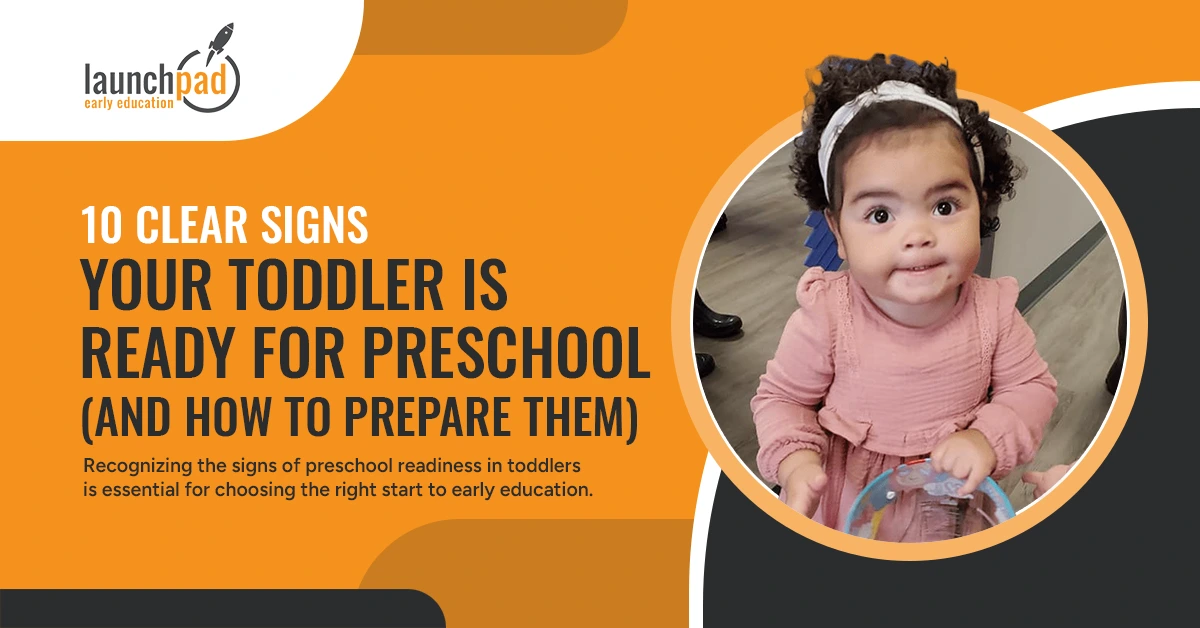
Recognizing the signs of preschool readiness in toddlers is essential for choosing the right start to early education. This guide outlines ten clear indicators—growing independence, simple self-care, interest in peers, ability to follow brief directions, attention for short activities, emerging language, curiosity, emotional regulation, separation tolerance, and comfort with routines. Each signal reflects developmental milestones that support a positive transition into a structured classroom.
In addition, practical preparation strategies—gradual separations, predictable schedules, play-based learning at home, and partnership with educators—help build confidence and ease the first-day transition. Families can align timing, expectations, and supports for a successful preschool launch with a thoughtful plan.
Separation Confidence: How to Know If Your Child Is Ready for Preschool
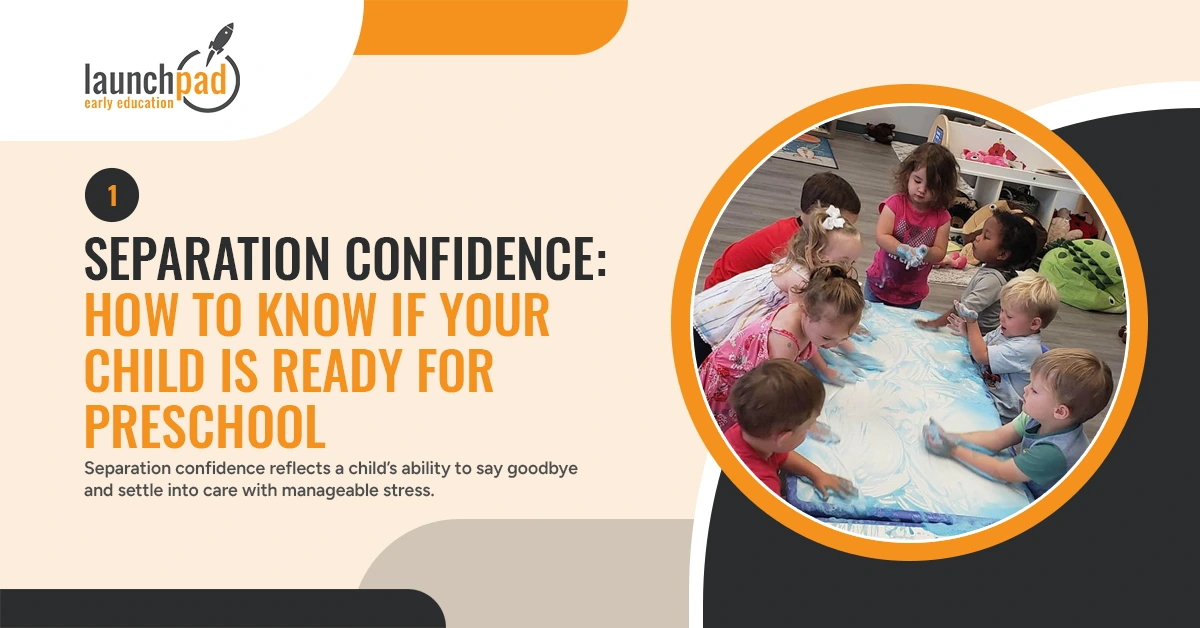
Separation confidence reflects a child’s ability to say goodbye and settle into care with manageable stress. Indicators include a brief protest that resolves within minutes, steady engagement with toys or peers, and willingness to seek comfort from a trusted adult. Children who show separation confidence resume play after noticing a parent’s departure and tolerate predictable routines at drop-off.
Readiness markers:
- Accepts a short, consistent goodbye without escalation
- Calms with teacher support or a comfort item
- Transitions to an activity within a few minutes
- Reconnects at pickup without lingering distress
Support strategies:
- Establish a simple goodbye ritual and keep it consistent
- Practice short, planned separations with familiar caregivers
- Use visual schedules to preview the day
- Label feelings and model calming tools (deep breaths, counting)
These practices strengthen security and ease the preschool transition.
2. Independent Self-Care Skills: Preschool Readiness Checklist in Action
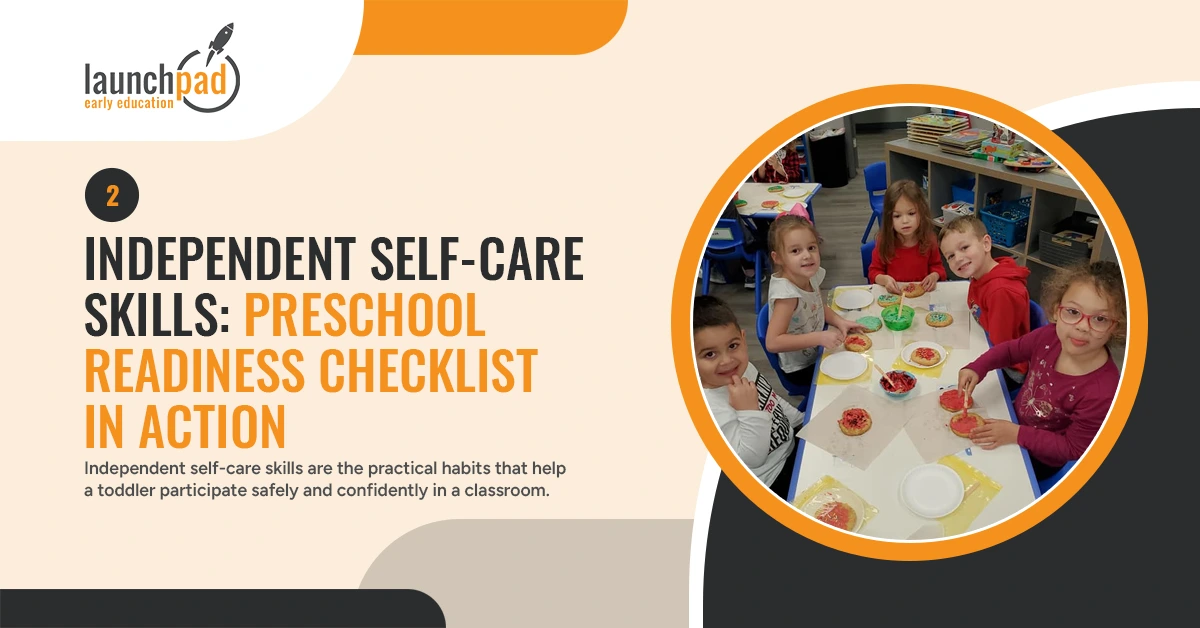
Independent self-care skills are the practical habits that help a toddler participate safely and confidently in a classroom. A readiness checklist clarifies which routines are secure and which need practice.
Readiness checklist:
- Toileting readiness: uses potty cues, participates in clean-up, washes hands
- Hygiene: thorough handwashing, nose wiping, coughing into the elbow
- Feeding: opens containers, uses utensils, cleans spills with guidance
- Dressing: manages simple fasteners, puts on shoes, and outerwear
- Belongings: carries a small backpack, recognizes labeled items
- Clean-up: returns materials to bins and follows simple sanitizing routines
- Resting: settles on a mat with a comfort item and quiet body
Build these skills by:
- Practicing each routine during daily transitions
- Choosing easy-on clothing and lunch containers
- Using visual steps and consistent language
- Praising effort and incremental independence
Consistent rehearsal makes self-care automatic and supports a smooth preschool day.
3. Steady Mood Regulation: Emotional Readiness for Preschool
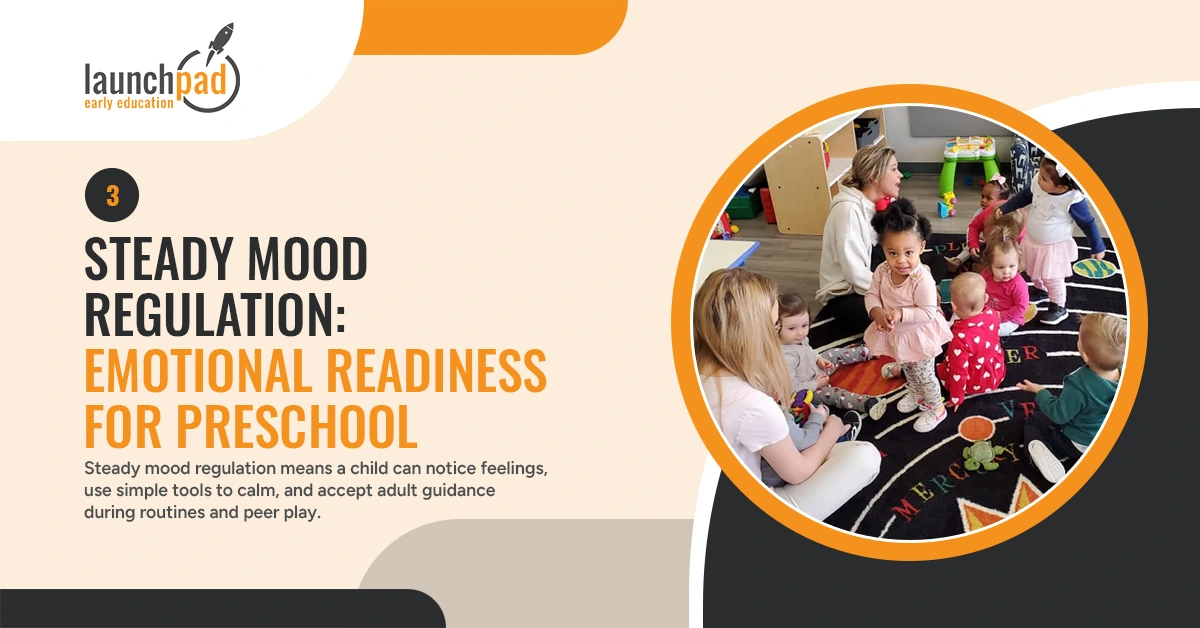
Steady mood regulation means a child can notice feelings, use simple tools to calm, and accept adult guidance during routines and peer play. In preschool, this capacity preserves learning time, supports safe choices, and reduces conflict. Children with emerging regulation recover from upsets and rejoin activities without prolonged distress.
Readiness indicators:
- Names basic feelings with adult prompts
- Uses coping tools (deep breaths, counting, gentle squeeze)
- Accepts limits and redirection without escalation
- Returns to play within a few minutes after the conflict
- Waits for short turns (1–3 minutes) with reminders
Strengthening strategies:
- Maintain predictable routines; use visual schedules and timers
- Coach emotions with clear language and calm modeling
- Rehearse start–stop games to practice impulse control
- Role-play conflict repair: stop, say, solution, rejoin
- Provide a calm-down basket (book, fidget, soft item)
These habits form a stable base for attention, cooperation, and positive peer relationships.
4. Ability to Follow 1–2 Step Directions Consistently
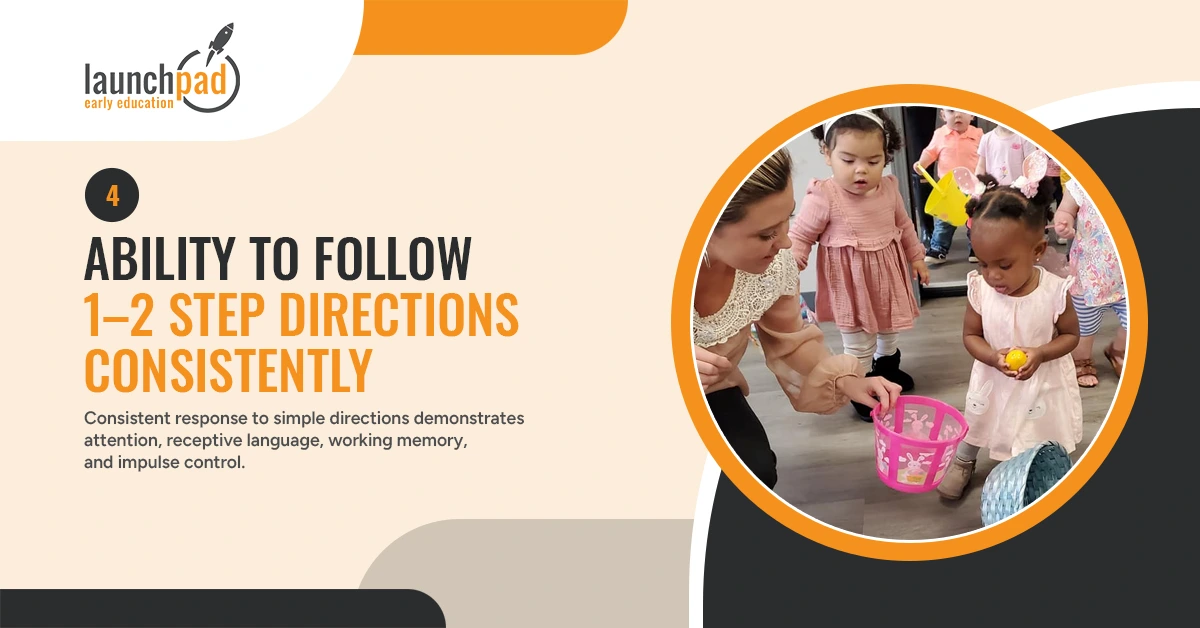
Consistent response to simple directions demonstrates attention, receptive language, working memory, and impulse control. In preschool, this skill supports safety, smooth transitions, and active participation in group learning.
Readiness indicators:
- Responds to name and makes eye contact before instruction
- Carries out one-step directions across routines (hang backpack, wash hands)
- Completes two-step sequences with minimal prompting (put the book away, sit on the rug)
- Waits to hear the complete instructions before acting
- Seeks clarification when unsure (“Which bin?”)
Practice strategies:
- Use brief, concrete language and “first/then” cues
- Gain attention first; pair words with gestures or a visual model
- Rehearse two-step games during play (build a tower, clap three times)
- Increase complexity gradually; support with picture schedules or cue cards
- Offer specific feedback that reinforces effort and accuracy
Reliable direction-following builds confidence and readiness for classroom routines.
5. Clear Communication of Needs and Feelings
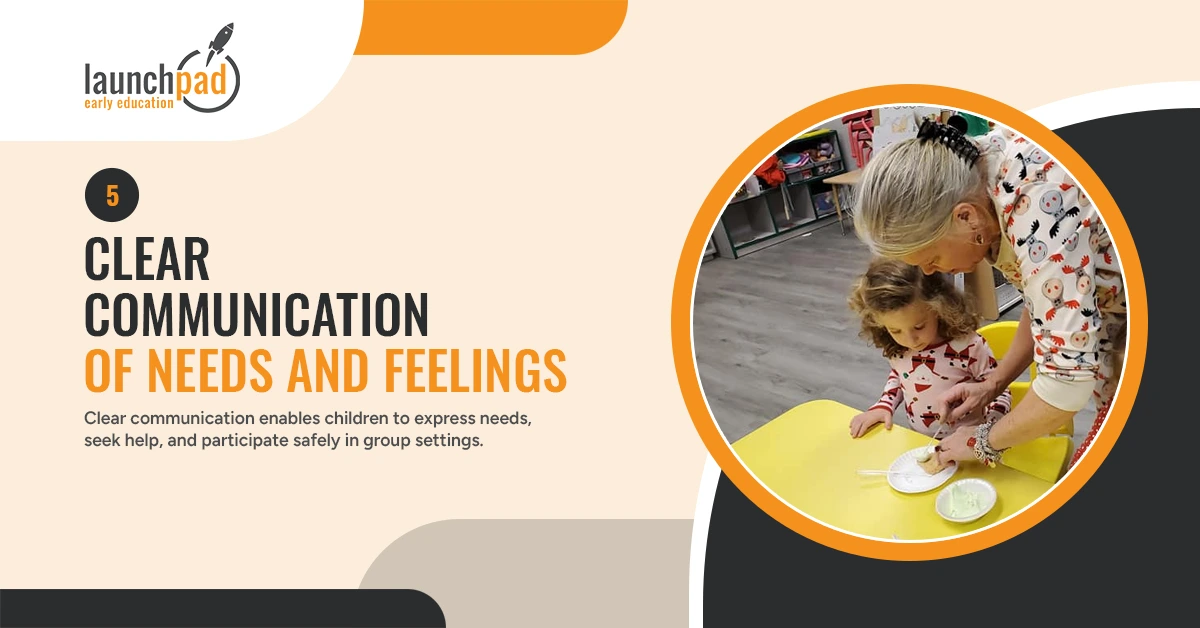
Clear communication enables children to express needs, seek help, and participate safely in group settings. In preschool, functional language—spoken words, gestures, or augmentative tools—reduces frustration, supports problem-solving, and strengthens peer relationships.
Readiness indicators:
- Uses words or short sentences to request, reject, and comment
- Labels basic feelings (happy, sad, mad, scared) with adult prompts
- Asks for help or clarification when uncertain
- Listens to peers, takes brief conversational turns, and maintains the topic
- Uses gestures, picture cards, or AAC consistently if speech is emerging
Strengthening strategies:
- Model simple sentence frames (“I need water,” “I feel upset”)
- Teach feelings words with visuals and daily check-ins
- Practice help-seeking scripts during routines (“Help please,” “Show me”)
- Read interactive books; pause to predict, label, and retell
- Encourage turn-taking games to build reciprocity
When children can communicate needs and feelings clearly, they engage more fully, resolve conflicts constructively, and experience a secure start to preschool.
6. Peer Interaction Through Sharing, Turn-Taking, and Cooperative Play
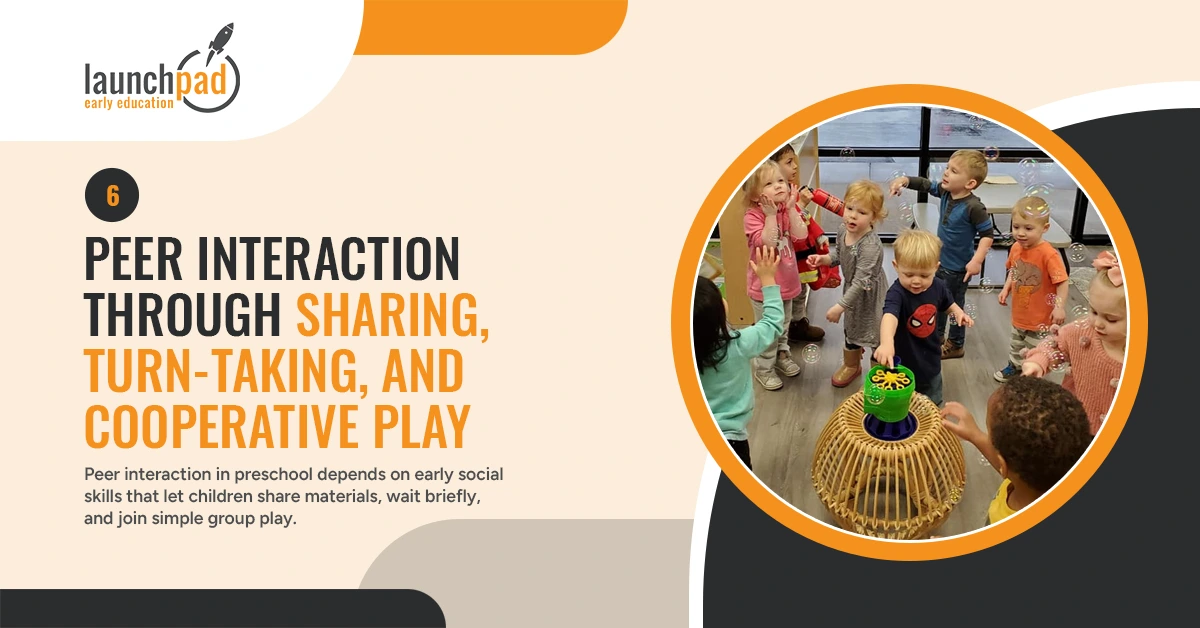
Peer interaction in preschool depends on early social skills that let children share materials, wait briefly, and join simple group play. With these skills, children enter groups smoothly, manage minor conflicts, and sustain play themes that grow language and problem-solving.
Readiness indicators:
- Offers a toy or space and accepts short waits
- Joins the ongoing play by matching the theme
- Uses simple social language: “my turn,” “your turn”
- Stays with the group after limits or redirection
Strengthening strategies:
- Model “give a turn, get a turn” with a visual timer
- Teach entry scripts and roles for pretend play
- Choose small-group games with shared goals
- Coach repair steps: state the problem, suggest a solution, and agree
Regular coaching in these routines builds empathy, self-control, and cooperative habits for classroom learning.
7. Sustained Attention for Short Group Activities (10–15 Minutes)
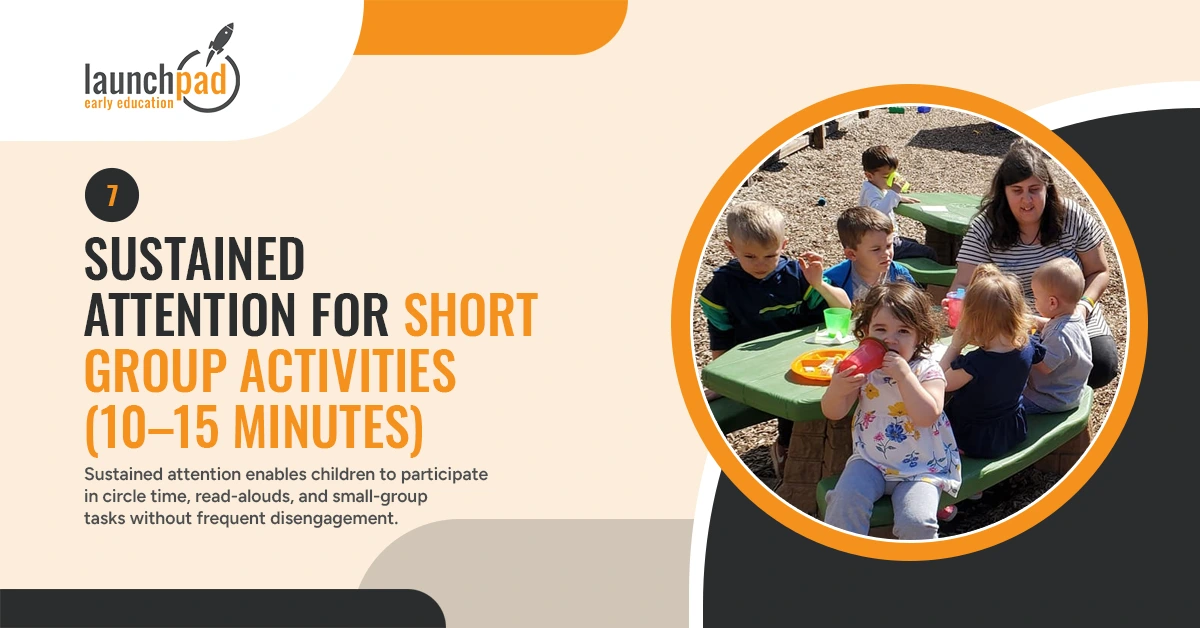
Sustained attention enables children to participate in circle time, read-alouds, and small-group tasks without frequent disengagement. In preschool, the goal is steady focus for 10–15 minutes with brief, age-appropriate movement and minimal redirection.
Readiness indicators:
- Sits in a designated spot and tracks the speaker or materials
- Maintains engagement through one short activity or a sequence of mini-activities
- Waits for a turn to respond rather than calling out
- Recovers attention after brief distractions without leaving the group
- Follows simple materials rules (hands to self, items stay in the center)
Strengthening strategies:
- Use visual agendas and clear start/finish cues
- Blend modalities within the 10–15 minutes (song, movement, hands-on item, quick question)
- Teach “quiet hands/ready body” routines with nonverbal signals
- Offer limited fidgets that support, not replace, attention
- Provide specific feedback on focused behaviors
Consistent scaffolds build stamina and prepare children for group learning.
8. Adaptability to Daily Routines and Transitions
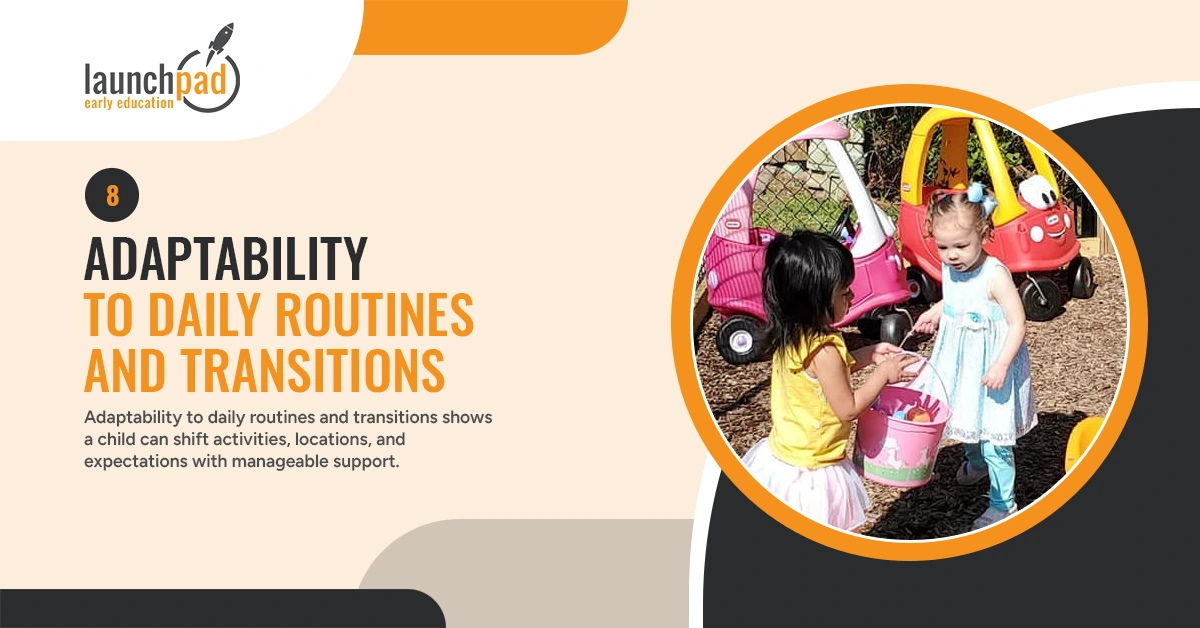
Adaptability to daily routines and transitions shows a child can shift activities, locations, and expectations with manageable support. This skill lowers stress, preserves learning time, and supports safety during shared movement in preschool.
Readiness indicators:
- Anticipates schedule with visuals and moves with minimal prompting
- Accepts changes with brief warnings and clear cues
- Completes end-of-activity routines (clean-up, restroom, line up)
- Waits during short pauses and relocates between spaces without distress
- Recovers quickly after unexpected changes or delays
Strengthening strategies:
- Post a visual daily schedule; mark steps “all done” as they occur
- Use “first–then” language and timer-based transition warnings
- Break transitions into small steps and assign simple helper jobs
- Rehearse routes and routines with practice walks and role-play
- Debrief changes, label coping efforts, and praise flexible behavior
Consistent scaffolds make transitions predictable and help children participate calmly across the preschool day.
9. Curiosity for Books, Songs, and School-Like Activities
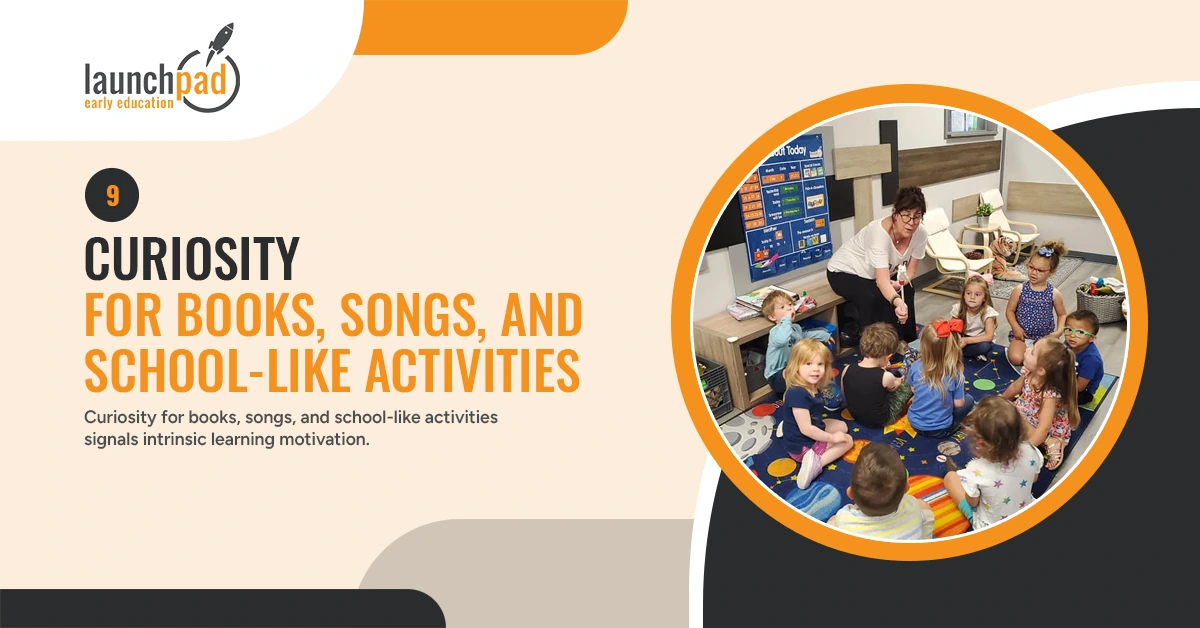
Curiosity for books, songs, and school-like activities signals intrinsic learning motivation. Children drawn to stories, music, and simple tasks join group routines more readily and persistently practice new skills, supporting language growth, memory, and social participation.
Readiness indicators:
- Selects books independently and requests repeat readings
- Listens to short stories and answers who/what questions
- Sings familiar songs and imitates simple motions or rhythms
- Attempts pre-writing: scribbles, traces lines, holds a crayon
Strengthening strategies:
- Schedule daily read-alouds with prediction, labeling, and retelling
- Build a song routine using fingerplays and steady-beat claps
- Set up a small “school corner” with crayons, paper, and puzzles
- Rotate manipulatives to match the challenge and sustain interest
Nurturing this curiosity creates positive associations and eases the shift into preschool.
10. Physical Stamina for a Half- or Full-Day Schedule
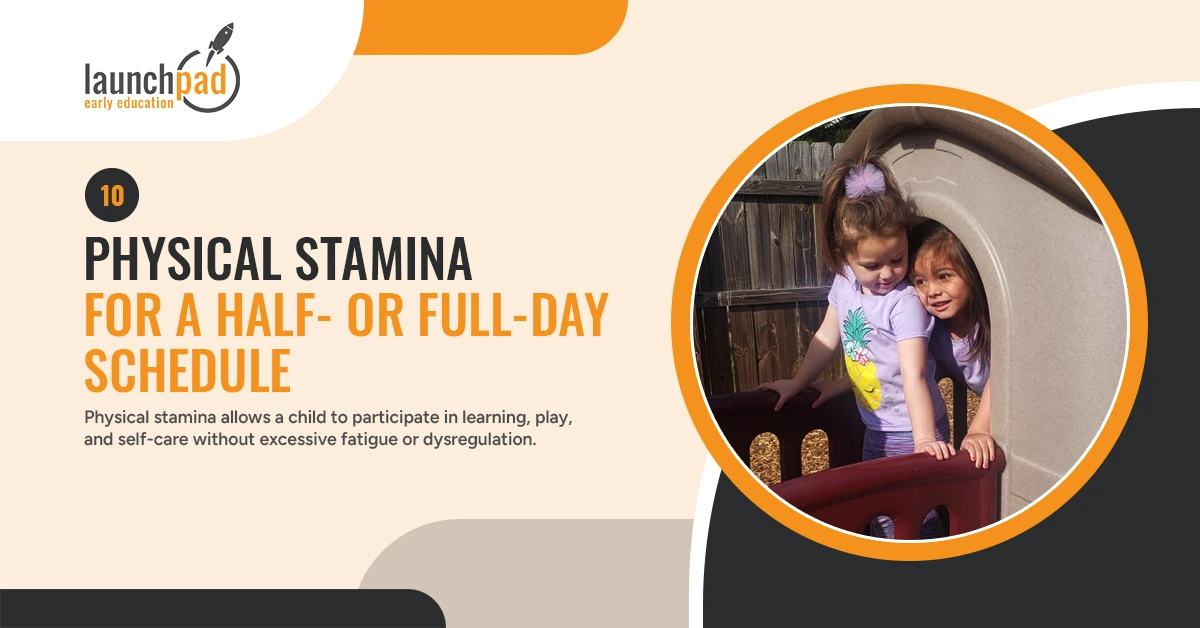 Physical stamina allows a child to participate in learning, play, and self-care without excessive fatigue or dysregulation. In preschool, reliable energy supports safe movement, steady attention, and positive peer engagement across indoor and outdoor routines.
Readiness indicators:
- Maintains comfortable energy through the morning block
- Joins gross-motor play (climbing, running) and recovers within minutes
- Settles for nap or quiet rest and wakes without prolonged irritability
- Eats snacks and drinks water regularly to sustain energy
- Tolerates typical classroom noise and movement without overwhelm
Strengthening strategies:
- Establish a consistent sleep schedule (10–12 hours, age-dependent)
- Offer a balanced breakfast and nutrient-dense snacks; encourage hydration
- Build endurance with family walks, playground circuits, and scooter time
- Teach pacing: alternate high-energy play with short, calm breaks
- Choose supportive footwear and clothing that allow free movement
- Preview the day’s active periods and plan a calm activity after lunch
Reliable stamina protects focus and safety, making a full preschool day manageable and productive.
Conclusion
A successful preschool transition rests on a clear view of readiness and steady preparation. Children arrive ready to learn and connect when separation confidence, self-care, mood regulation, direction following, communication, peer interaction, attention, adaptability, curiosity, and physical stamina come together. Readiness develops over time; small, consistent routines at home build the habits that support comfort and participation in the classroom. Families set the pace by observing strengths, addressing a few focused goals, and partnering with educators to align expectations and supports.
Contact LaunchPad Early Education at (615) 809-2211 or visit https://launchpad-ee.com/ for guidance or to plan a gentle start.