

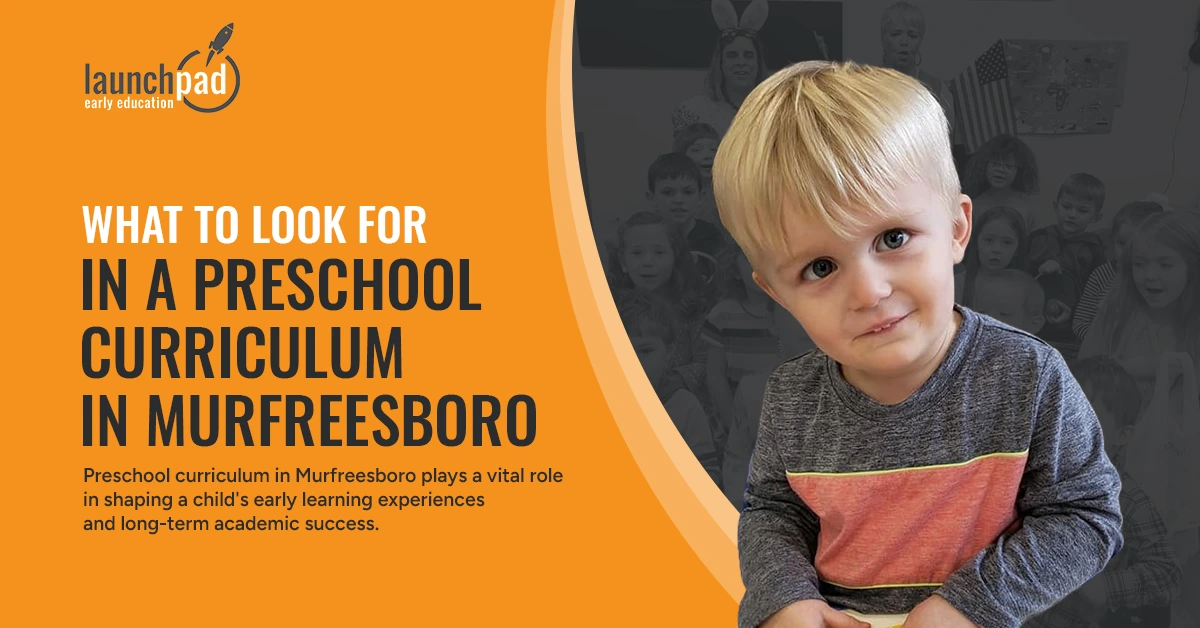
Preschool curriculum in Murfreesboro plays a vital role in shaping a child’s early learning experiences and long-term academic success. When evaluating programs for your child, it’s important to consider how the curriculum supports cognitive development, social-emotional growth, physical coordination, and creativity.
A high-quality curriculum integrates age-appropriate activities, guided instruction, and meaningful play to create a well-rounded foundation. Families in Murfreesboro should seek a preschool that offers a nurturing environment where each child is encouraged to explore, discover, and thrive through purposeful learning. Understanding what to look for can help you make a confident, informed decision.
The Role of Early Childhood Education in Murfreesboro
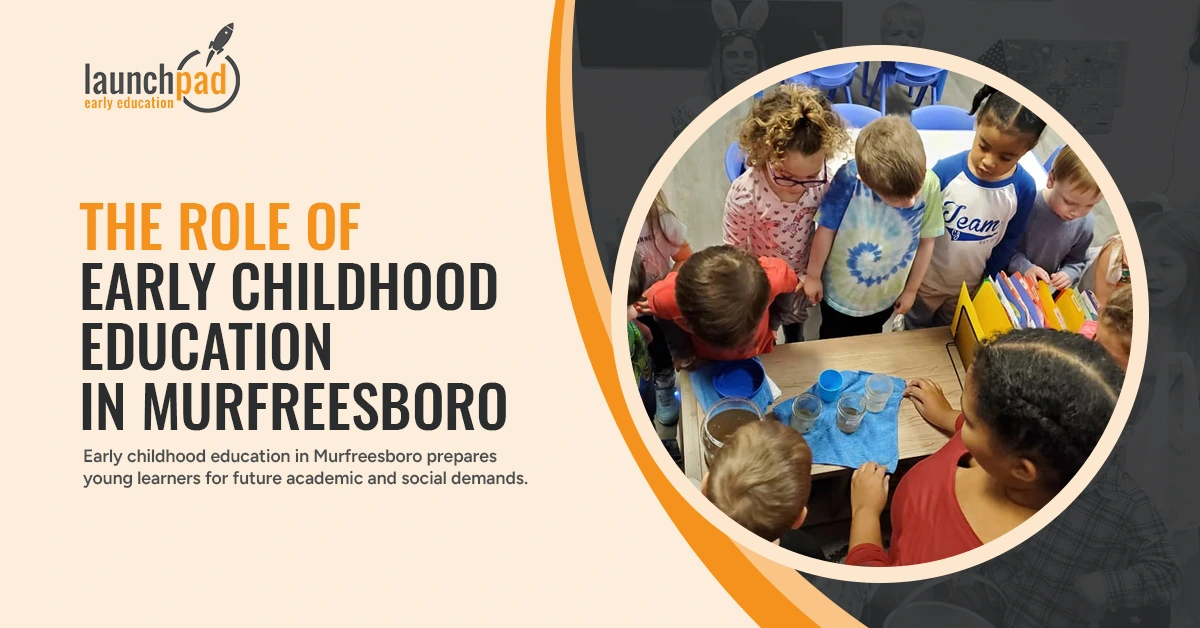 Early childhood education in Murfreesboro prepares young learners for future academic and social demands. These early learning experiences shape cognitive development, personal growth, social confidence, and emotional well-being.
Building a Strong Academic Foundation
Preschool programs rooted in early childhood education help children develop essential academic skills in a structured, age-appropriate way. Children are introduced to core concepts that support long-term success through guided lessons and interactive learning.
- Early literacy skills: Children explore letters, sounds, and vocabulary through stories and phonics-based activities.
- Basic numeracy understanding: Counting, sorting, and number recognition are introduced in playful, engaging formats.
- Problem-solving strategies: Educators guide children in exploring cause-and-effect relationships through puzzles and critical thinking games.
- Scientific thinking: Natural curiosity is encouraged through experiments and observations that promote inquiry.
- Creative expression: Arts, music, and imaginative play offer diverse outlets for self-expression and innovation.
These academic fundamentals are introduced with care and consistency, ensuring that children feel confident as they take their first steps toward formal schooling.
Nurturing Social and Emotional Development
A high-quality early childhood program does more than teach academic subjects—it helps children develop into compassionate, resilient individuals. Classrooms are intentionally structured to promote empathy, cooperation, and a sense of belonging.
- Cooperative play opportunities: Children learn to share, take turns, and collaborate with peers.
- Routine-based environments: Predictable daily schedules give children a sense of security and structure.
- Emotion regulation support: Educators help children constructively identify and manage feelings.
- Positive reinforcement: Encouragement and praise help build confidence and self-esteem.
- Peer relationship building: Group activities foster friendships and social engagement.
Early childhood educators lay the groundwork for positive relationships and strong interpersonal skills by focusing on social-emotional growth.
Encouraging Physical and Cognitive Growth
Physical activity and cognitive challenges are essential parts of early childhood education. Programs incorporating movement and thinking tasks help children strengthen both body and mind.
- Fine motor development: Cutting, drawing, and threading beads improve hand-eye coordination.
- Gross motor exercises: Climbing, running, and jumping support balance and physical strength.
- Memory-building games: Simple matching and sequencing activities enhance recall and pattern recognition.
- Language-rich settings: Ongoing conversation and vocabulary exposure stimulate cognitive processing.
- Task-focused instruction: Multi-step directions help children build attention and follow-through.
These components work together to provide a balanced, developmentally appropriate approach that supports the whole child.
What to Expect from a Faith-Based Preschool in Murfreesboro
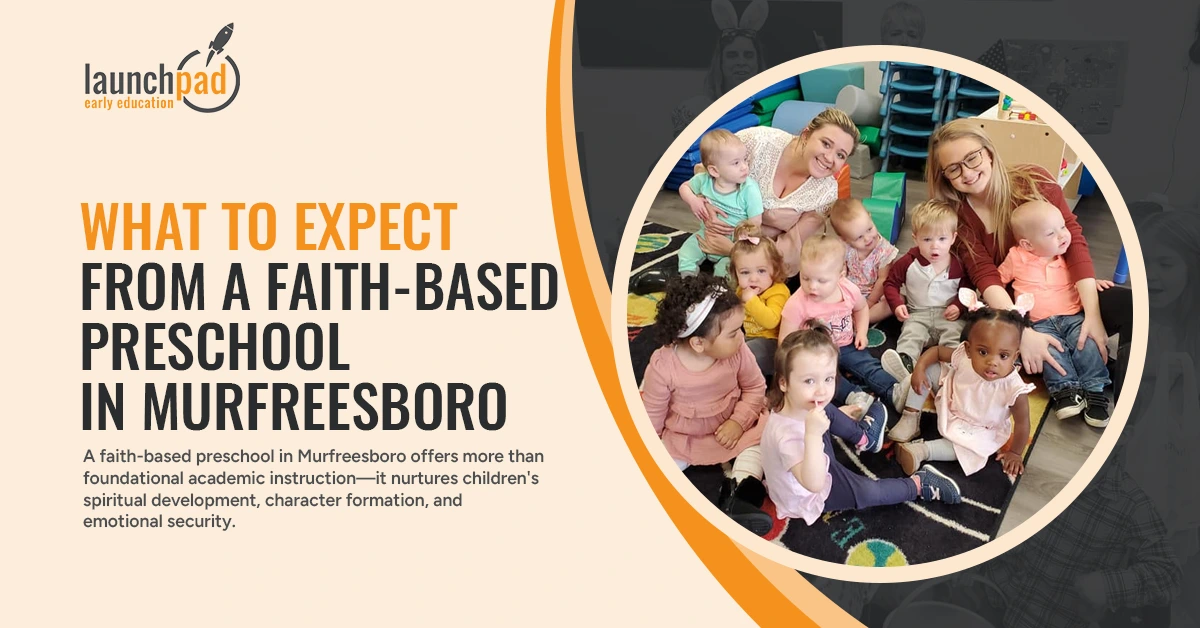
A faith-based preschool in Murfreesboro offers more than foundational academic instruction—it nurtures children’s spiritual development, character formation, and emotional security. These programs blend age-appropriate learning with core values that support moral growth and respectful behavior, creating an environment where children thrive in every aspect of their development.
Faith-Integrated Learning Environment
One of the defining features of a faith-based preschool is the integration of spiritual principles into the daily curriculum. This includes moments of reflection, age-appropriate lessons on kindness and gratitude, and stories that reinforce moral lessons.
- Daily devotionals or prayer time: Children learn simple prayers and participate in calm, focused routines that promote mindfulness.
- Biblical storytelling: Educators share values through familiar and accessible faith-based narratives.
- Celebrating faith-based holidays: Children explore the meaning of important religious traditions and holidays.
- Moral instruction woven into lessons: Concepts like honesty, patience, and respect are naturally incorporated into academic activities.
- Encouragement of personal reflection: Children are guided in recognizing their feelings and actions in light of shared values.
These practices help children form a strong internal compass while supporting their sense of identity and belonging within a caring community.
Character Development and Emotional Growth
Faith-based programs prioritize character education alongside academic preparation. Children are encouraged to practice compassion, cooperation, and responsibility in everyday interactions.
- Empathy and kindness: Classroom activities promote helping others and understanding peers’ needs.
- Accountability and integrity: Teachers guide students in understanding the importance of making thoughtful, honest choices.
- Confidence and purpose: Children develop a strong sense of self-worth grounded in the belief that they are uniquely valued.
- Respect for others: Diverse backgrounds and individual differences are honored within a framework of shared values.
- Supportive discipline: Gentle, consistent guidance reinforces positive behavior and fosters emotional maturity.
By promoting these values early on, faith-based preschools prepare children to enter the world with compassion, respect, and a clear sense of purpose.
In Murfreesboro, families can expect faith-based preschools to offer a well-rounded experience that strengthens the mind and the heart. These programs create a nurturing setting where children are inspired to grow academically, socially, and spiritually.
Benefits of Play-Based Learning in Murfreesboro Classrooms
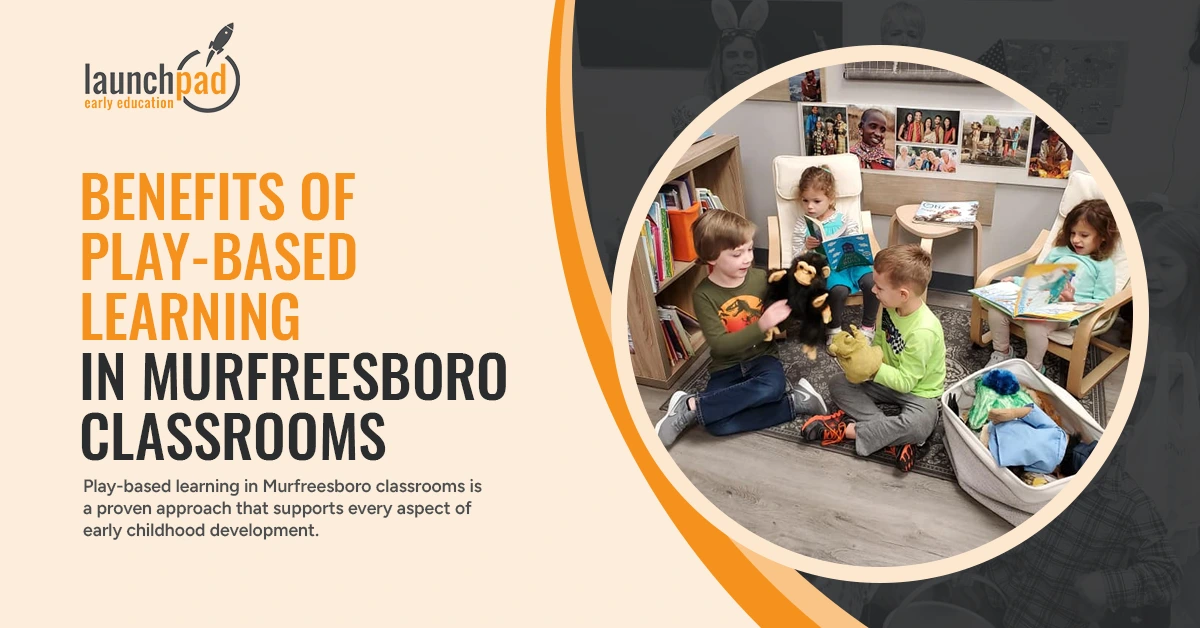
Play-based learning in Murfreesboro classrooms is a proven approach that supports every aspect of early childhood development. This method allows children to explore, create, and collaborate in environments that foster curiosity, independence, and confidence. Through guided play, young learners develop essential skills while remaining engaged and joyful in the learning process.
Fostering Cognitive and Academic Development
When children engage in play, they are actively experimenting with new ideas and problem-solving in real-time. Play-based learning environments are rich with opportunities for children to develop foundational academic concepts in natural and rewarding ways.
- Math through hands-on activities: Sorting, counting, and measuring objects introduces key numerical concepts.
- Language through storytelling: Pretend play and role-playing promote vocabulary growth and communication skills.
- Science through exploration: Sensory tables, nature walks, and experiments encourage inquiry and observation.
- Literacy through imaginative play: Reading signs, writing menus, and labeling drawings build early reading and writing abilities.
- Critical thinking through puzzles: Games and construction tasks promote logic, sequencing, and concentration.
These learning experiences provide a strong academic foundation while keeping children motivated and curious.
Supporting Social and Emotional Growth
Play offers natural opportunities for children to build social skills, manage emotions, and form positive relationships. Teachers guide students through peer interactions in play-based classrooms, helping them navigate challenges and celebrate successes.
- Collaboration and teamwork: Group play teaches compromise, negotiation, and shared responsibility.
- Self-regulation skills: Children learn patience, turn-taking, and impulse control through play routines.
- Confidence and autonomy: Making choices during play fosters decision-making and independence.
- Empathy and kindness: Pretend scenarios help children understand different perspectives and emotions.
- Conflict resolution: Educators model and support peaceful problem-solving strategies.
These experiences contribute to a strong sense of belonging and emotional resilience.
Encouraging Creativity and Joy in Learning
A key advantage of play-based learning is that it nurtures creativity and enthusiasm for discovery. Classrooms are designed to inspire imaginative expression and joyful participation.
- Open-ended materials: Blocks, art supplies, and dramatic play props support endless creativity.
- Freedom of choice: Children select activities based on their interests, increasing engagement.
- Flexible learning spaces: Areas for quiet play, active exploration, and group collaboration meet diverse needs.
- Celebration of individuality: Children are encouraged to share their ideas and celebrate their unique talents.
- Integration of arts and movement: Music, dance, and crafts are essential elements of daily learning.
By embracing a play-based approach, Murfreesboro classrooms help children thrive in an environment where learning feels meaningful and joyful.
Core Elements of a Strong Preschool Curriculum
A strong preschool curriculum offers more than basic instruction—it provides a balanced approach that nurtures every aspect of a child’s development. A well-structured program incorporates academic readiness, emotional growth, social engagement, and physical development, all within a safe and supportive environment.
Academic Readiness Through Engaging Activities
High-quality preschool programs use structured activities to introduce essential academic skills in age-appropriate and engaging ways. Rather than rote memorization, children learn through exploration, repetition, and interaction.
- Early literacy foundations: Storytime, letter recognition, and phonics activities build reading readiness.
- Math exploration: Sorting, counting, and comparing objects develops numeracy and spatial awareness.
- Hands-on science: Observing plants, weather changes, and simple experiments encourages inquiry and discovery.
- Language development: Rich vocabulary exposure and structured conversation promote strong communication skills.
- Creative expression: Art, music, and dramatic play help children express themselves meaningfully.
These learning areas are presented in a supportive format that promotes confidence and fosters a love for learning.
Supporting the Whole Child’s Development
Beyond academics, a strong curriculum recognizes the importance of nurturing emotional, social, and physical development. These elements help children build resilience and healthy relationships.
- Social skill-building: Group activities teach cooperation, empathy, and respectful communication.
- Emotional support: Teachers help children identify and manage feelings in safe, predictable settings.
- Physical development: Movement, fine motor practice, and outdoor play support coordination and strength.
- Routine and structure: Consistent daily schedules promote a sense of security and responsibility.
- Positive behavior guidance: Gentle, supportive discipline encourages growth and self-regulation.
A preschool curriculum integrates these core components to lay the foundation for well-rounded development. Families seeking early education in Murfreesboro should look for programs prioritizing academic excellence and holistic child development.
Conclusion
Choosing the right preschool curriculum in Murfreesboro is a meaningful step in supporting your child’s growth and future success. From early childhood education and faith-based principles to the proven benefits of play-based learning, a well-rounded curriculum nurtures academic, social, emotional, and physical development thoughtfully and intentionally. By focusing on programs that emphasize the whole child, families can feel confident that their little ones are receiving the foundation they need to thrive—both now and in the years to come.
Explore how LaunchPad Early Education can support your child’s journey. Learn more at https://launchpad-ee.com/ or call Call us now at (615) 809-2211 to connect with our team today.